
Creatine Pre-Workout: Benefits for Strength & Performance
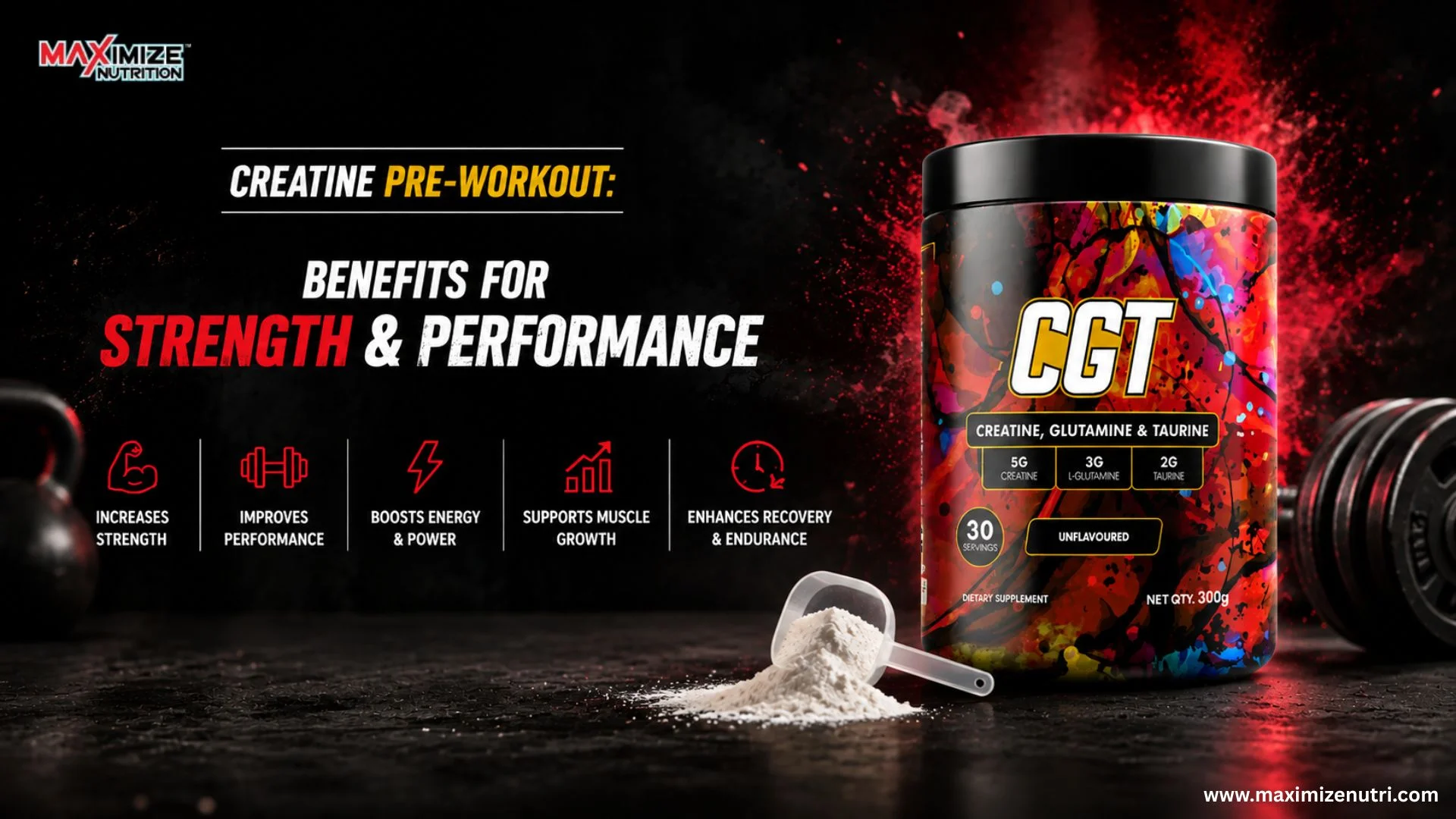
Creatine happens to be the most studied supplement in the world of fitness. It is very popular among people looking for ways to enhance their physical power and performance, and those who want to train more intensively. But the main question here often sounds like this: Is it possible to use creatine as pre-workout? The answer is yes, you may take creatine prior to your exercise, but the effects of it do not depend on whether it was taken right before the physical activity or not.
The effect of taking creatine is quite different from pre-workout supplements, which are created for instant energy boost or stimulation. Instead, taking creatine regularly will allow you to fill your muscles with creatine stores. They are able to give your body enough energy to perform short intensive activities, like weight lifting, sprinting, jumping, and other similar exercises.
What Is Creatine?
Creatine is an organic compound that occurs naturally in the body’s muscle cells. Creatine is naturally produced in the body and can also be gained from food sources and supplements. In the muscles, creatine is stored mainly as phosphocreatine.
In times of intense physical activities, muscles require energy immediately. Phosphocreatine helps in the production of ATP which is used by the body for energy production during muscle contraction. Therefore, creatine plays a role in helping one achieve better performance during physical activities.
This is just one of the several reasons why creatine is widely used as a supplement.
Benefits of Taking Creatine Before a Workout
1. Enhances Strength Performance
The most important thing about taking creatine is probably the fact that it affects strength performance. Regular consumption of creatine can make strength performance much better, especially when there is a need to perform a high intensity workout which requires multiple sets.
When there is improved strength performance, it will definitely be much easier for someone to gradually increase the training load. It is very useful, especially for those who want to have strong muscles and do well in the gym.
2. Helps With Workout Performance
Creatine may work great for any type of activity that requires you to use short burst of high intensity. There are weight lifting exercises, resistance training, sprinting, and many others.
Taking creatine regularly can help you keep the good level of your performance even when the training requires many sets.
3. Stimulates Muscle Building
The most widely known function of creatine lies in its ability to assist in muscle building by providing help in terms of training performance and muscle growth. Being able to train and perform well during sets gives muscles the necessary stimulus to adapt to the conditions.
It is also important to note that creatine increases the water content of muscle fibers, thus stimulating the gain in body mass and fullness of the muscles. At first glance, this phenomenon cannot be considered pure muscle growth, but it is a side effect typical for creatine consumption.
4. Assists in High-Intensity Training
When talking about high-intensity exercises, creatine becomes relevant since it helps meet the needs of such exercise. When your training involves heavy compound exercises, explosiveness and difficult sets, you can use creatine to assist you with this type of training.
As opposed to many stimulant-based products, creatine does not have to create a rush to be effective; on the contrary, its main purpose is to help the energy system of the muscle.
Is Creatine Better Before or After a Workout?
There is really no necessity for you to consume your creatine at a specific minute every single day. The most critical thing here is consistency in daily use.
Consumption of creatine prior to workout is something that can be done quite rationally, depending on how your schedule goes. There are those who consume creatine prior to working out, some who take it after their workouts, and others at other different times.
What matters most is ensuring that the consumption of creatine becomes part of your daily life.
How Much Creatine Should You Take?
For most healthy individuals, 3–5 grams of creatine monohydrate per day is an average dosage that is often recommended for maintenance purposes. Moreover, creatine monohydrate is considered to be the most researched form of creatine.
There is an approach called “loading,” during which large amounts of creatine per day are taken for several days; however, “loading” is optional. All you need to do is take a certain dose every day, and your muscle creatine levels will build up over time.
Follow the serving instructions on your particular product and consult your doctor if you have any health issues or take medications.
Creatine and Pre-Workout Supplements
This fact needs to be considered to realize that creatine and traditional pre-workout do not always overlap.
The majority of pre-workout products incorporate different components aimed at providing energy, alertness, focus, or better exercise performance. In turn, creatine acts in a way that allows the energy system of muscles to function more efficiently due to an increased amount of creatine.
In this context, creatine can be combined into the pre-workout protocol, but it doesn’t have to create a particular experience provided by many stimulants.
Such a protocol may include the consumption of the daily dose of creatine before exercise along with the necessary intake of water and food.
Does Creatine Give You Instant Energy?
Creatine cannot be compared to caffeine because it is not supposed to act as a source of immediate energy. It is possible that you will not experience any effects right away after consuming the supplement.
Creatine works through building up enough supplies of this substance in the body. That is why it is important to consume creatine regularly rather than just before a specific training session.
It can be assumed that if you take creatine before workouts, then you do this regularly.
Hydration and Creatine
Proper hydration is essential for a fitness regimen. Creatine helps to maintain water balance in the muscles. So, having sufficient fluid levels in your body is a good idea especially if you work out often or train under hot conditions.
Instead of just paying attention to supplements, ensure that your fitness regimen involves sufficient water intake, proper nutrition, sleep, and workouts.
Who Can Benefit From Creatine?
Creatine is beneficial to people taking part in weight training, bodybuilding, resistance training, sprinting, and many other activities where there is a need for multiple intense bursts of effort.
This can be extremely helpful to those people who desire to develop their strength and enhance their training performance in general. But supplements cannot substitute a healthy diet and regular exercises.
Novices can also take creatine, although proper exercise form, reliable workout regimen, sufficient food intake and adequate rest must become the base for them.
FAQs – Creatine Pre-Workout
1. Can creatine be taken before a workout?
Yes, creatine can be taken before a workout. However, the exact timing is less important than taking it consistently every day.
2. What are the benefits of taking creatine as a pre-workout?
Creatine can support strength, high-intensity exercise performance, power output, and training capacity when used consistently.
3. Does creatine give instant energy before a workout?
No. Creatine is not an instant stimulant like caffeine. Its main benefits come from gradually increasing and maintaining creatine stores in the muscles.
4. How much creatine should I take before a workout?
A commonly used daily amount is 3–5 grams of creatine monohydrate. Follow the serving instructions of your specific product.
5. Is creatine better before or after a workout?
There is no need to focus heavily on pre- or post-workout timing. Consistent daily use is more important.
Final Thoughts
Creatine Pre-Workout: Benefits for Strength & Performance is something that would help you out if you were looking to enhance your training regimen. Creatine may boost strength, performance in high intensity activities, and muscle growth and is considered one of the most commonly used supplements among athletes.
Consuming creatine prior to your workout will be absolutely fine, although the optimal timing is not critical; the regularity is more important here. Taking a daily dose of creatine monohydrate, along with consistent training, proper nutrition, hydration, and rest, could be a good idea for performance-oriented training program.
In order to get the best results out of using creatine, you should start with focusing on the basics of training – consistent training, proper nutrition, hydration, good sleep and supplementation where appropriate.